What is Dry Running of Centrifugal Pumps?
Dry running (dry operation/idling) of a centrifugal pump refers to an abnormal operating condition where the pump cavity lacks liquid, has insufficient liquid volume or loses suction fluid while the pump keeps running. It is a highly destructive fault that frequently occurs in industrial centrifugal pumps. Centrifugal pumps rely on conveyed liquid for lubrication, cooling and hydraulic pressure stabilization. Once deprived of medium protection, internal components will rub directly against each other and accumulate heat rapidly. Even a short period of idling can cause irreversible damage and even complete pump failure leading to shutdown.
I. Internal Working Mechanism of Centrifugal Pump Dry Running
Under normal operating conditions, liquid inside the pump forms a liquid film on the surfaces of mechanical seals, bearings and impellers. This film not only reduces friction between metal parts but also dissipates heat generated during operation, while balancing hydraulic resistance of the rotating impeller to ensure stable equipment operation.
When dry running occurs, air fully replaces the conveyed liquid inside the pump cavity, pushing the equipment far beyond its designed operating limits. Once the liquid film disappears completely, all precision components lose lubrication and cooling. The impeller rotates at high speed under no load, failing to convey medium while creating unbalanced internal stress. Various faults overlap and escalate continuously, evolving from partial component damage to full-system failure within a short time.
II. Specific Hazards of Centrifugal Pump Dry Running
Dry running of centrifugal pumps will not burn out the motor directly, yet it inflicts fatal damage on core precision components, drastically raising maintenance costs and shortening equipment service life. Its primary hazards fall into five categories:
1.Complete Failure of Mechanical Seals
Mechanical seals depend on liquid film for isolation, lubrication and temperature reduction. During dry running, direct dry friction between seal end faces causes an abrupt temperature surge, resulting in ablation, deformation and cracking of seal rings, which directly leads to liquid leakage from the equipment. This is the most common fault caused by dry running.
2.Accelerated Wear of Bearings and Rotors
Without liquid lubrication, bearing friction resistance rises sharply with severe local heat accumulation, easily triggering wear, seizure and excessive vibration. Prolonged dry rotation may further bend the rotating shaft and unbalance the rotor, permanently ruining the equipment’s operating precision.
3.Unstable Hydraulic Conditions
Without liquid resistance to constrain the impeller, its operating state becomes unbalanced, bringing turbulent flow and unstable pressure. The hydraulic performance of the equipment deteriorates completely, making it unable to meet normal production conveyance requirements.
4.Local Heat Accumulation
Heat trapped in core areas including mechanical seals, pump casings and bearings cannot dissipate, forming localized high-temperature zones that speed up component aging and damage.
5.Thermal Deformation of Metal Components
Combined sustained high temperature and internal stress deform metal parts such as impellers and pump casings, disrupting component fitting clearances. Subsequent operation will feature loud noise, violent shaking and insufficient output power, resulting in permanent defects.
III. Root Causes of Centrifugal Pump Dry Running
In industrial scenarios, dry running faults rarely stem from inherent equipment defects; most arise from system design flaws, pipeline operating conditions or manual operational errors. Common causes are categorized clearly as follows:
1.Insufficient Liquid Level
The liquid level in the suction tank drops below the pump inlet pipe orifice, allowing air to enter the suction pipeline and cutting off fluid intake.
2.Improper Pump Priming and Venting
Inadequate priming or incomplete venting before startup leaves air pockets trapped inside the pump cavity, creating an air lock that blocks normal liquid inflow.
3.Restricted Pipeline Flow
Partially closed inlet valves, clogged filter screens or blocked bent pipelines limit liquid supply and hinder fluid suction.
4.Pipeline Air Leakage
Poor sealing or loose joints on the inlet pipeline let air seep into the piping, breaking the negative pressure environment required for fluid suction.
5.Flawed System Design
Unreasonable pipeline layout and insufficient NPSH (Net Positive Suction Head) margin render the water pump prone to unstable fluid suction and intermittent dry running.
6.Improper Manual Operation
Non-standard startup and shutdown procedures plus inadequate daily patrol inspections result in no-load pump operation.
IV. Early Warning Signs of Dry Running in Centrifugal Pumps
Dry running damage does not occur abruptly; obvious early warning signals appear at the initial fault stage. Timely handling can avoid severe shutdown losses:
1.Abnormal Noise
Sharp metallic squeals generated by dry friction between components, distinguishable from the smooth noise under normal operation.
2.Excessive Vibration
Unstable hydraulic conditions and rotor imbalance significantly boost the frequency and amplitude of overall equipment vibration.
3.Sudden Temperature Rise
Rapid temperature increase at the pump body, seal end and bearing positions.
4.Dropped Flow and Pressure
The pump runs normally yet delivers persistently low, unstable outlet flow and output pressure.
5.Fluctuating Motor Current
Disordered mechanical operating conditions cause erratic rises and falls in the motor’s operating current.
6.Intermittent Liquid Discharge
Recurring air intake into the pump cavity leads to discontinuous, uneven jetting of discharged liquid.
V. Emergency Response and Comprehensive Prevention Solutions for Dry Running
Emergency Response
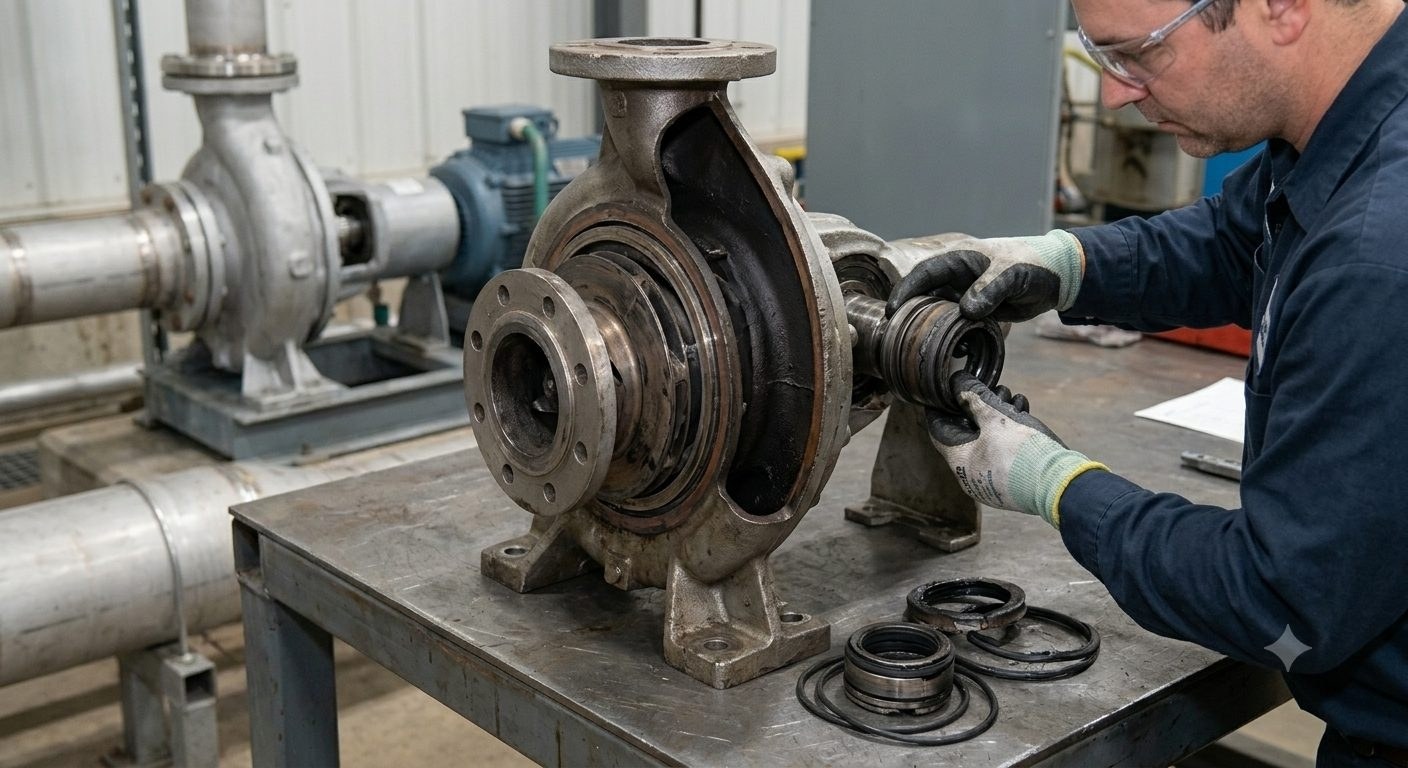
Stop the pump immediately once dry running symptoms are detected. Spraying cold water or adding liquid directly is forbidden, as drastic temperature differences will crack and deform high-temperature metal components. Allow the equipment to cool naturally before inspecting the mechanical seal, bearings and impeller for damage. Replace defective parts, troubleshoot issues including insufficient liquid level, pipeline air leakage and blockages, and confirm normal operating conditions prior to restarting the pump.
Daily Prevention Solutions
Adopt dual protection consisting of standardized operation and intelligent monitoring to eliminate dry running risks at the source.
1.Operational Measures
Strictly implement startup protocols: verify adequate liquid level, fully open inlet valves and unclog filter screens before startup. Complete full pump priming and thorough venting to prohibit irregular startup and shutdown practices.
2.Monitoring Measures
Install liquid level sensors, flow switches and pressure sensors to monitor operating conditions in real time. The equipment can automatically trigger alarms and shut down upon liquid cutoff, zero flow or abnormal pressure, delivering all-round stable operation protection for centrifugal pumps.
Conclusion
Dry running of centrifugal pumps is a controllable and preventable high-risk operating condition. Its core hazards originate from friction-induced heat accumulation, unstable hydraulic performance and component deformation caused by medium shortage. Most dry running faults arise from operational negligence and abnormal system conditions. Strict adherence to standardized startup procedures, regular pipeline patrol inspections and installation of intelligent monitoring protection devices can fully eliminate dry running risks.
For inquiries about Omron Tech Pumps centrifugal pump product parameters, customized solutions and quotations, please feel free to contact us.
Website: www.Omron Tech Pumps.com
Email: sales@Omron Tech Pumps.com