What is a Trash Pump? A Complete Guide to Solving Tough Media Pumping Challenges
Water is an indispensable resource in our daily lives and industrial production, used everywhere from agricultural irrigation to construction site drainage. However, not all water is clear and free of impurities. When water is mixed with fallen leaves, mud, sand, or even larger solid waste, ordinary clean-water pumps often fail, operating inefficiently or breaking down quickly. This is where the trash pump comes in. Today, we will fully explore what a trash pump is, its core functions, working principles, application scenarios, daily maintenance, and purchasing considerations, helping you understand its core value in one article and easily handle various complex pumping needs.
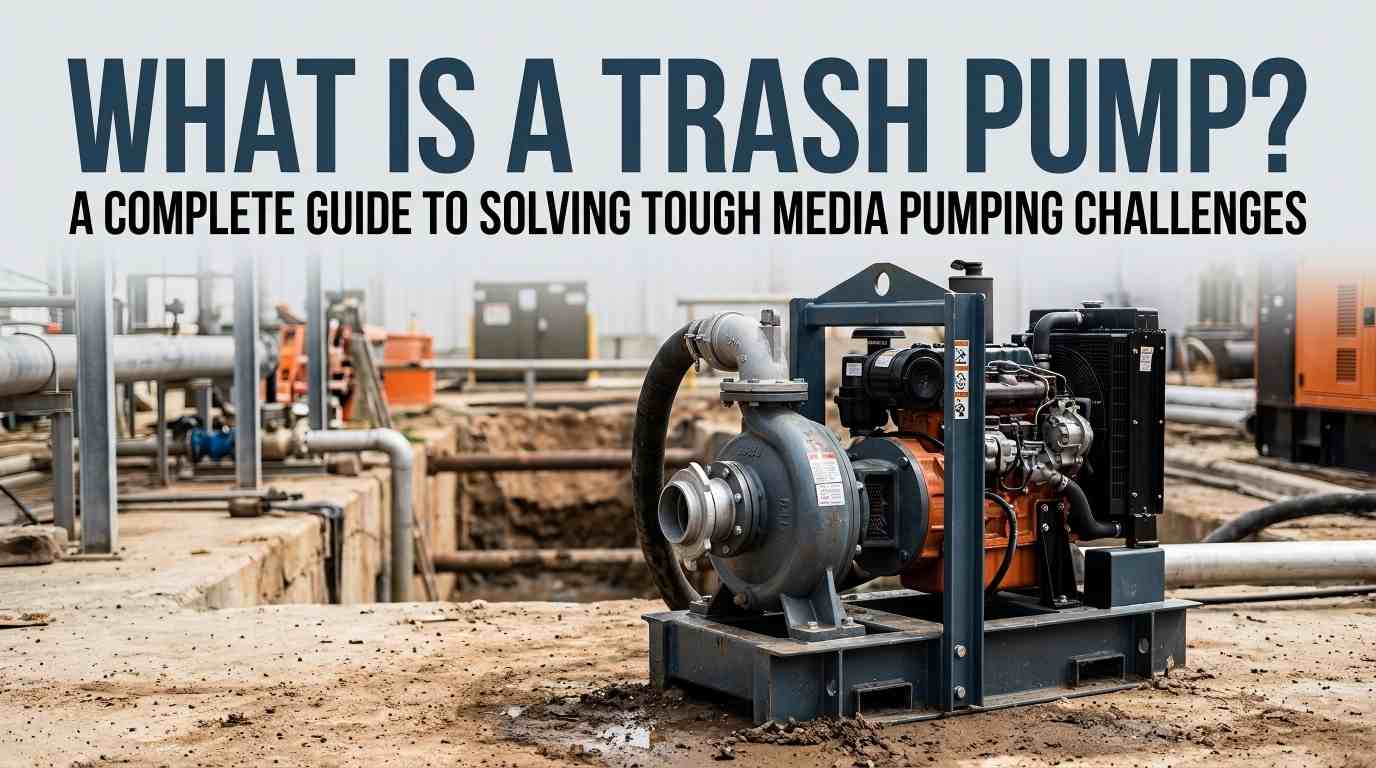
What is a Trash Pump?
As the name suggests, a trash pump is a type of water pump specifically designed to handle liquids containing debris or solid particles. Unlike ordinary centrifugal pumps, it is engineered for harsh operating conditions and can efficiently and safely extract high-concentration dirty water with solids.
It easily handles leaves, branches, mud, and fibrous materials in industrial wastewater. Trash pumps are widely used in the following industries:
- Construction: Foundation pit drainage, mud slurry transfer
- Agricultural irrigation: Pumping river water containing weeds and sediment
- Flood control and emergency rescue: Rapidly draining floodwater with large amounts of floating debris
- Mining and industry: Transferring tailings slurry and wastewater with solid particles
In-Depth Analysis: Working Principle and Core Components of Trash Pumps
The ability of trash pumps to "ingest" debris and discharge smoothly lies in their unique structural design. Understanding their working principle helps you use them better.
1. Engine or Electric Motor
Trash pumps are typically powered by two types of sources: fuel engines (gasoline or diesel) and electric motors.
- Fuel-driven: Common in outdoor, off-grid construction sites or emergency rescue scenarios; highly mobile and powerful.
- Electric-driven: Used in fixed locations such as basement sewage drainage and wastewater treatment plants; quieter and more eco-friendly.
The power source provides rotational force to drive the pump shaft and impeller at high speed.
2. Pump Casing
The pump casing is usually made of durable materials such as high-strength cast iron or heavy-duty steel. It not only houses internal components but also withstands impact and abrasion when pumping debris-laden, abrasive liquids.
3. Impeller
The impeller is critical for generating pumping action. Trash pump impellers differ greatly from standard pump designs:
- Large-passage design: Allows solid particles to pass without clogging.
- Special shapes: Such as single-channel, double-channel, or vortex impellers, effectively preventing fiber entanglement.
As the impeller spins rapidly, it creates a low-pressure zone (vacuum) at the center, drawing water and debris into the pump.
4. Suction Hose and Discharge Hose
- Suction hose: Connects to the pump inlet and extends to the water source. It must be well-sealed and usually fitted with a strainer at the bottom to prevent oversized rocks from entering directly.
- Discharge hose: Connects to the outlet and delivers debris-laden water to the designated location. Typically made of wear-resistant rubber or PVC.
5. Starting System: Priming and Self-Priming
Trash pumps usually require priming before startup. This removes air from the pump casing and suction hose to create a vacuum, allowing atmospheric pressure to draw water in. Some advanced trash pumps have built-in starters or self-priming systems that automatically complete venting, greatly simplifying operation.
Operating Procedure for Trash Pumps
Proper operation is key to ensuring the efficiency and service life of trash pumps:
- Inspection and connection: Check that all parts are intact; connect the suction and discharge hoses.
- Submerge in water source: Immerse the foot valve or strainer of the suction hose into the water source to ensure sufficient water supply.
- Prime: Fill the pump casing with water until it overflows to ensure internal air is purged.
- Start: Start the engine or turn on the power; the impeller begins to rotate.
- Transfer: A vacuum forms inside the pump, drawing in water and debris, which are then forcefully discharged through the discharge hose.
Summary
With core advantages of anti-clogging and wear resistance, trash pumps solve pumping challenges that ordinary water pumps cannot handle, covering a wide range of industrial scenarios. Mastering core knowledge and usage skills, and selecting and operating the right trash pump, can efficiently reduce operating costs and safeguard production and daily life. Follow Omron Tech Pumps for more professional knowledge about trash pumps, helping you better handle various harsh media pumping needs.