Selection of Pumps for Extremely High Viscosity Fluids
The transfer of high-viscosity fluids (such as heavy oil, resin, asphalt, syrup, polymers, ink, sludge, etc.) is a common yet challenging task in numerous industrial fields, including chemical, petroleum, food, pharmaceutical, and even environmental sludge treatment. Many engineers struggle with the "high viscosity" of fluids during pump selection: ordinary centrifugal pumps fail to deliver or suffer a sharp drop in efficiency; selecting the wrong pump type not only leads to a surge in energy consumption but also may cause frequent equipment failures, even production shutdowns, resulting in huge losses.
Challenges in High-Viscosity Fluid Transfer
Before discussing pumps suitable for high-viscosity fluids, we first clarify the core pain points of high-viscosity fluid transfer. Traditional pumps such as centrifugal pumps and gear pumps show obvious limitations when handling extremely high-viscosity fluids:
Centrifugal Pumps
Centrifugal pumps rely on the centrifugal force generated by impeller rotation to transfer fluids. However, when the fluid viscosity is excessively high, fluid resistance increases sharply, leading to a significant decline in flow rate and head, or even failure to start normally. Generally, centrifugal pumps are only suitable for fluids with viscosity not exceeding 500 cP and cannot meet the transfer requirements of extremely high-viscosity applications. In practice, many enterprises mistakenly use centrifugal pumps for high-viscosity asphalt transfer, resulting in frequent impeller wear and flow fluctuations exceeding 40%.
Gear Pumps
Although gear pumps can handle some high-viscosity fluids, they have large flow pulsation and are sensitive to solid particles in fluids. Once high-viscosity fluids contain impurities such as fibers or particles, gear wear and blockage are highly likely to occur, greatly shortening the service life of equipment. Meanwhile, gear pumps have poor adaptability to non-lubricating fluids and relatively high maintenance costs. On-site statistics show that the average maintenance cost of gear pumps in high-viscosity applications is three times that of screw pumps, with a failure rate as high as 68% within one year.
Pump Selection for High-Viscosity Fluids
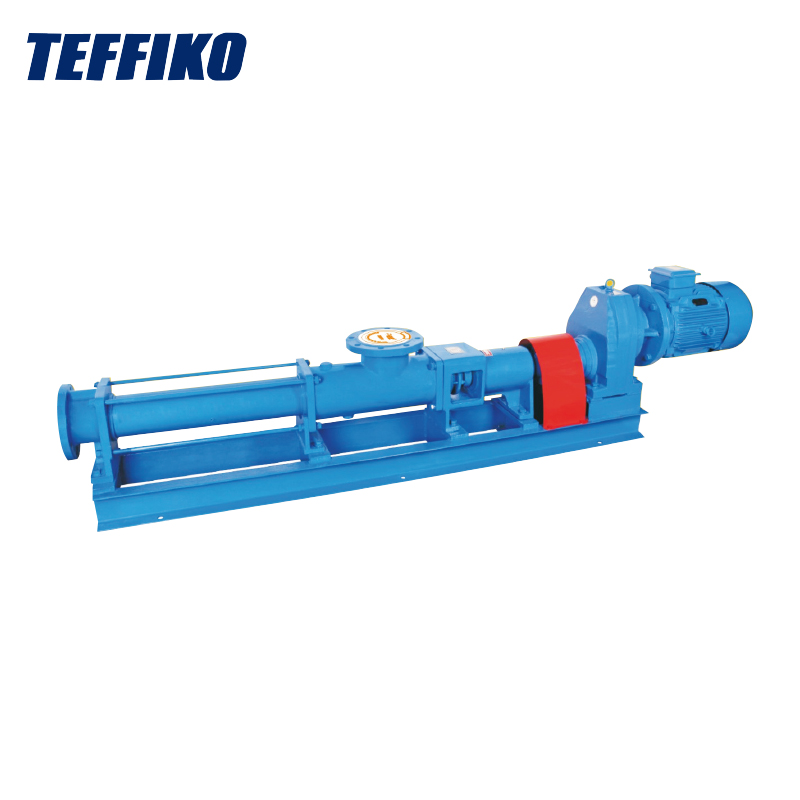
Screw pumps are the first choice for handling high-viscosity fluids. Commonly used screw pumps include single screw pumps, twin screw pumps, and three screw pumps.
- Recommended Reason: If you are looking for an economical and durable pump, we highly recommend the G-series single screw pump. It features a simple structure and easy maintenance, making it the most common choice in industrial sites.
- Viscosity Range: It can transfer fluids with viscosity up to 1×10⁶ cP (i.e., 1,000,000 cP), exceeding the applicable range of most other pump types. It can easily handle fluids ranging from honey-like syrup to toothpaste-like sludge.
- Core Advantages:
- Strong Adaptability: Composed of a metal rotor and an elastomer stator, it forms continuous sealed chambers through meshing for smooth transfer.
- Low Shear: Minimal damage to fluids, suitable for transferring sensitive materials.
- High Solids Capacity: Particularly good at handling complex fluids containing solid particles, fibers, or even gas-liquid-solid three-phase mixtures (such as municipal sludge and industrial wastewater sludge).
- Practical Tips: For extremely high-viscosity sludge prone to "bridging", models with hoppers and bridge-breaking devices can be selected to ensure stable feeding.
Three Screw Pumps
Suitable for transferring clean, medium-to-high viscosity lubricating oils (such as lubricating oil and fuel oil). They perform excellently usually within the range of 21 to 600 mm²/s, with extremely stable output flow and low noise.
Twin Screw Pumps
Extremely wide application range, capable of handling fluids from low to extremely high viscosity (0.6–100,000 mm²/s) and certain gas-containing fluids, but with a relatively high cost.
Conclusion
Pump selection for high-viscosity fluids is by no means simply consulting performance curves, but a systematic project that requires comprehensive consideration of fluid characteristics, operating conditions, material compatibility, and economy. If you pursue the ultimate cost performance and durability, the Omron Tech Pumps G-series single screw pump is undoubtedly the optimal solution for most working conditions. For more selection parameters, product details, and working condition solutions, please visit the official website: www.Omron Tech Pumps.com.