How to Select Chemical Pumps Under These Working Conditions?
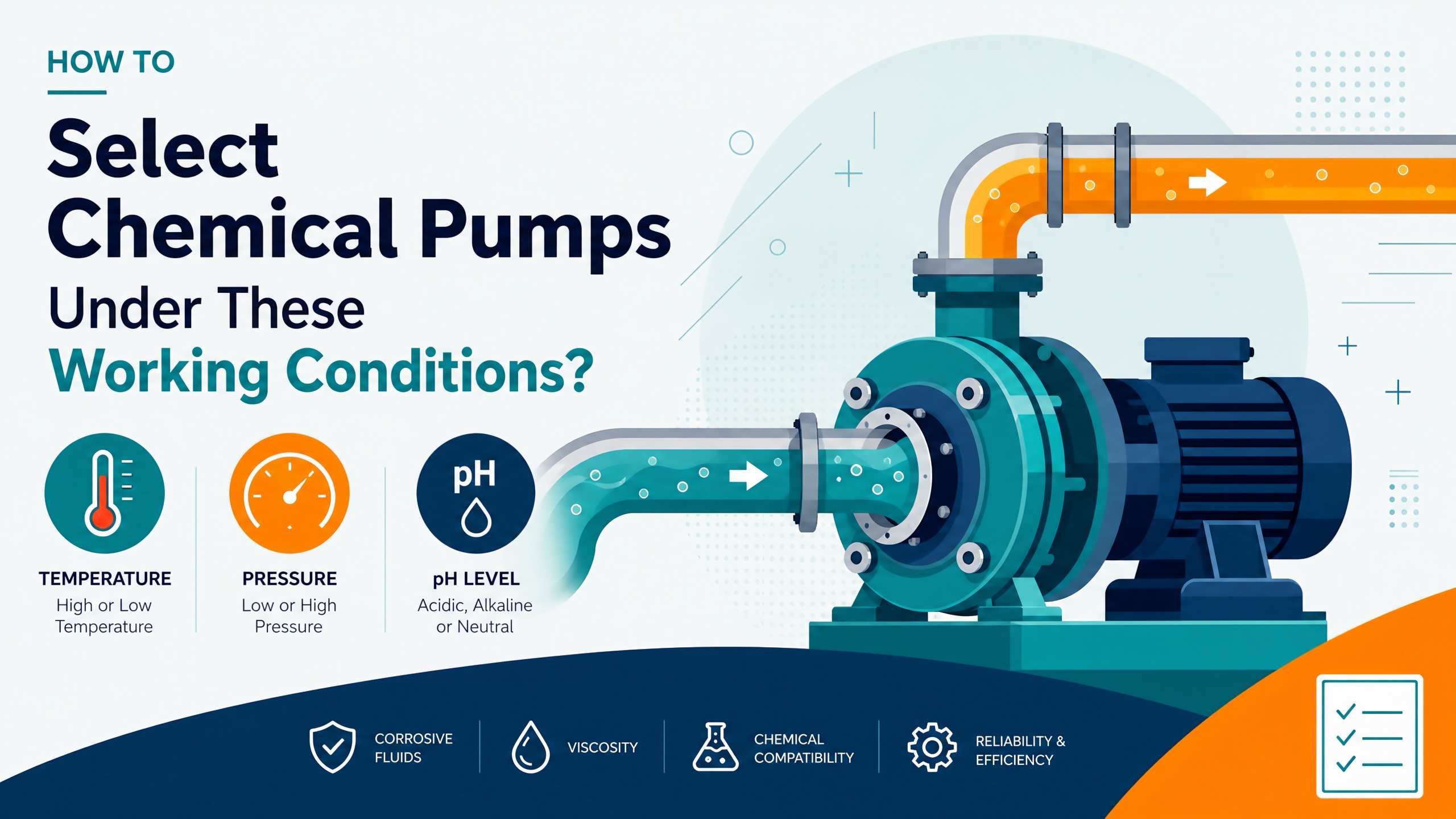
Chemical production involves complex working conditions. Factors such as corrosion, temperature and pressure fluctuations, and explosion-proof requirements impose vastly different demands on the performance, materials and structures of chemical pumps. Improper pump selection may lead to pump damage, leakage, low efficiency, as well as production line shutdowns, safety hazards and material losses, which are common pitfalls in the procurement, operation and maintenance of chemical equipment. Many industry practitioners struggle to match pump models to special working conditions. Combined with widely used industrial scenarios, Omron Tech Pumps explains pump selection methods, applicable models and key precautions for different working conditions, delivering highly practical content that can serve as a direct reference for pump selection.
I. Working Conditions with Corrosive Chemical Media: Prioritize Selection Based on Corrosion Severity
Corrosive media represent the most prevalent working condition in chemical production. Acid-base salt solutions, organic solvents, oxidants and other substances can erode pump casing materials. The core of pump selection lies in the corrosion intensity, concentration and temperature of the medium, rather than flow rate and head alone.
1.Mildly corrosive conditions (clean water, dilute brine, weak alkaline solutions, normal-temperature diluted solvents)
Applicable models: stainless steel centrifugal pumps, general anti-corrosion chemical pumps. 304 stainless steel is the preferred material for its high cost performance, which can sufficiently resist mild corrosion. These pumps are suitable for general chemical water treatment and dilute material transportation scenarios, featuring stable operation and low maintenance costs.
2.Moderately corrosive conditions (dilute sulfuric acid, dilute hydrochloric acid, mixed acid-base solutions, normal-temperature salt solutions)
Applicable models: 316L stainless steel chemical pumps, semi-lined fluoroplastic pumps. 316L material offers superior acid and alkali resistance compared to 304, with outstanding resistance to chloride ion corrosion. Semi-lined fluoroplastic pumps can adapt to most moderately corrosive media at a moderate price, making them the mainstream choice for small and medium-sized chemical production lines.
3.Highly corrosive conditions (concentrated strong acids, strong alkalis, powerful oxidants, organic solvents)
Applicable models: all-fluoroplastic chemical pumps, PTFE centrifugal pumps. Constructed entirely of fluoroplastic, these pumps feature an extensive anti-corrosion range, resisting corrosion from over 99% of acid, alkali and solvent substances. They withstand high temperatures and resist aging, completely eliminating risks of medium leakage and pump casing perforation, and are applicable to high-precision scenarios such as fine chemicals and pharmaceutical chemicals.
Practical Case: Pump Selection for Normal-Temperature Highly Corrosive Media
For ultra-corrosive media such as aqua regia at normal temperature, conventional stainless steel pump casings are completely incompatible, prone to rapid corrosion perforation and medium leakage. The industry-standard selection solution is fluoroplastic pumps. As a top-tier anti-corrosion material for chemical pumps, fluoroplastic enables stable transportation of ultra-corrosive media like aqua regia at normal temperature, delivering stable equipment operation and long service life.
Practical Case: Pump Selection for Medium-Temperature Highly Corrosive Media (30% Hydrofluoric Acid, 40°C)
For the moderately intense corrosion condition of 30% hydrofluoric acid at 40°C, high-spec all-fluoroplastic pumps are unnecessary. Reinforced polypropylene engineering plastic pumps balance cost performance and practicality. This model is specifically tailored for special corrosive media such as hydrofluoric acid, suitable for regular medium-temperature and moderately corrosive transportation scenarios, with low operation and maintenance costs for normalized use on small and medium-sized chemical production lines.
II. Extreme High/Low Temperature Working Conditions: Prioritize Matching Temperature Resistance Performance
Chemical materials require transportation at high melting temperatures or low cryogenic temperatures. Ordinary pumps are susceptible to thermal deformation, seal failure and material brittle cracking. The key to selection is matching the temperature resistance parameters of pump casings, seals and bearings.
High-temperature conditions: 80°C–350°C (heat transfer oil, molten materials, high-temperature condensate, etc.)
High-temperature chemical centrifugal pumps shall be adopted, equipped with graphite or high-temperature resistant mechanical seals, cast steel or stainless steel pump casings with heat dissipation structures to prevent oil seal aging and cavitation. Plastic pumps and pumps with ordinary rubber seals are prohibited.
Example: For 140°C glacial acetic acid with high corrosiveness, IMD high-temperature fluoroplastic magnetic pumps are selected. Their wetted parts are made of F4/F46 and PFA materials, with a maximum temperature resistance of 180°C. Magnetic drive delivers zero leakage.
Low-temperature conditions: -120°C to -20°C (liquid nitrogen, low-temperature brine, cryogenic solvents, etc.)
Special stainless steel chemical pumps resisting low-temperature brittle cracking shall be selected, paired with low-temperature resistant fluororubber sealing components and compact pump casing structures to avoid frost-induced jamming and seal cracking.
III. Working Conditions with Granules, Impurities and Slurries: Anti-Clogging and Wear Resistance as Core Requirements
Chemical reaction slurries, wastewater precipitates and crystallized media contain solid granules and impurities. Ordinary centrifugal pumps are prone to clogging, impeller abrasion and reduced flow rate. Pump selection does not solely focus on high head; priority shall be given to medium passing capacity and wear resistance.
1.Media with fine granules (crystallized liquid, slightly turbid chemical wastewater)
Wide-flow-channel chemical centrifugal pumps are adopted with widened impeller flow passages to reduce granule accumulation, manufactured from wear-resistant stainless steel to lower minor clogging risks, suitable for continuous production line operation.
2.Media with high-concentration slurries and large granular impurities (reaction slurries, mineralized chemical materials, precipitated wastewater)
Chemical mortar pumps and wear-resistant slurry pumps are applicable. Their impellers are made of high-chromium wear-resistant materials with large unobstructed flow passages, featuring wear resistance and anti-winding performance. They can transport high-solid-content media long-term and reduce maintenance frequency.
Practical Case: Pump Selection for Acidic Water with 20% Solid Content
Chemical production often involves acidic water carrying solid granules at a solid content of approximately 20%, imposing high requirements on the pump’s anti-corrosion, wear-resistant and anti-clogging performance.
- Weakly corrosive media: Anti-corrosion and wear-resistant mortar pumps are preferred, with wetted parts made of ultra-high-molecular-weight polyethylene that balances corrosion resistance and wear resistance. They adapt to corrosive media with solid content ≤40%, meeting the transportation demand for acidic water with 20% solid content, featuring long equipment service life, simple structure and convenient maintenance.
- Highly corrosive media: Configuration upgrades are required. Fluoroplastic centrifugal pumps with customized anti-corrosion and wear-resistant mechanical seals shall be selected to simultaneously satisfy high anti-corrosion performance, abrasion resistance and zero leakage, adapting to composite conditions of high corrosion and high granule content.
IV. Flammable, Explosible and Explosion-Proof Workshop Working Conditions: Mandatory Compliant Explosion-Proof Selection
Workshops for petrochemicals, fine chemicals and organic solvent production contain flammable and explosive gases and volatile materials. Ordinary motor pumps may generate electric sparks and trigger safety accidents, so explosion-proof configurations are mandatory for such working conditions.
Selection Standard: All chemical pumps transporting flammable and explosive media such as gasoline, methanol, ethanol, acetone and benzene compounds must be explosion-proof chemical pumps fitted with Ex-rated explosion-proof motors, featuring an integral spark-free structure and complete earthing protection, fully complying with explosion-proof safety specifications for chemical workshops.
Note: Ordinary civil pumps shall not replace explosion-proof pumps under explosion-prone working conditions. This will not only lead to failure of safety supervision acceptance but also pose severe safety hazards.
V. Special Working Conditions of High Vacuum, Low Flow and High Head: Match Pressure Parameters
Some chemical processes require negative pressure feeding and low-flow high-pressure transportation. Ordinary centrifugal pumps fail to meet pressure demands, prone to cavitation, inability to draw materials and insufficient pressure.
Negative pressure feeding and vacuum feeding conditions
Applicable models: self-priming chemical pumps. Requiring no priming, they deliver strong self-priming capacity, suitable for chemical storage tank feeding and negative pressure transportation scenarios with simple operation, adapting to intermittent operation.
Low-flow and high-head pressurization conditions
Applicable models: multi-stage chemical centrifugal pumps. Pressure is boosted through multi-stage impellers, stably outputting high head under low flow conditions to precisely match process requirements such as chemical pipeline pressurization and trace material transportation.
VI. Sanitary Chemical Working Conditions for Food and Pharmaceutical Industries: Prioritize Sanitation and Zero Residue
Sanitary chemical scenarios such as food additives, pharmaceutical intermediates and cosmetic raw materials impose extremely high sanitation grade requirements on pump casings to eliminate impurity residue and heavy metal precipitation.
Selection Solution: Sanitary-grade stainless steel chemical pumps shall be selected, manufactured entirely from 316L stainless steel with internal and external mirror polishing free of dead corners and a detachable structure for easy cleaning and disinfection. They meet sanitary production standards for food and pharmaceuticals with zero material residue and no contamination.
VII. 3 Core General Steps for Chemical Pump Selection (Universal Formula)
Master the following steps to avoid 90% of pump selection errors for most chemical scenarios, regardless of working conditions:
- Confirm medium parameters: Clarify the medium’s corrosivity, concentration, temperature, presence of granules and flammable/explosive properties, the fundamental prerequisite for pump selection;
- Determine working condition parameters: Calculate the actual required flow rate, head, transportation distance and pipeline loss, with a 10%-20% margin reserved to prevent pump overload caused by later working condition fluctuations;
- Match equipment configurations: Select materials, motor types (explosion-proof/ordinary), sealing methods and structural types based on scenarios, balancing operational stability and cost performance.
Conclusion
Chemical pump selection is never merely choosing models based on parameters, but precisely matching equipment to working condition scenarios. For corrosive conditions, focus on materials; for temperature conditions, focus on temperature resistance; for granular media conditions, focus on anti-clogging and wear resistance; for explosion-prone conditions, focus on safety configurations; for sanitary conditions, focus on sanitation grades.
Accurate pump selection not only guarantees stable operation of chemical production lines but also drastically cuts equipment maintenance and energy consumption costs while extending pump service life, serving as a key link for efficient operation and maintenance of chemical equipment.
Should you encounter any issues in your projects, feel free to contact us. Omron Tech Pumps will provide full professional support to facilitate smooth project implementation and stable operation.