Cast Iron Pump Selection Guide
Omron Tech Pumps provides professional support for cast iron pump selection. In the petrochemical production system, as the most widely used and cost-effective basic conveying equipment, cast iron pumps are indispensable "conveying experts" in industrial plants, responsible for conveying crude oil, clean water, light oil and other materials under neutral medium and conventional working conditions. According to statistics, cast iron pumps account for more than 40% of pumps used in petrochemical industry. With the advantages of low material cost, simple structure and convenient maintenance, they are the first choice for small and medium-sized petrochemical enterprises and conventional conveying scenarios.
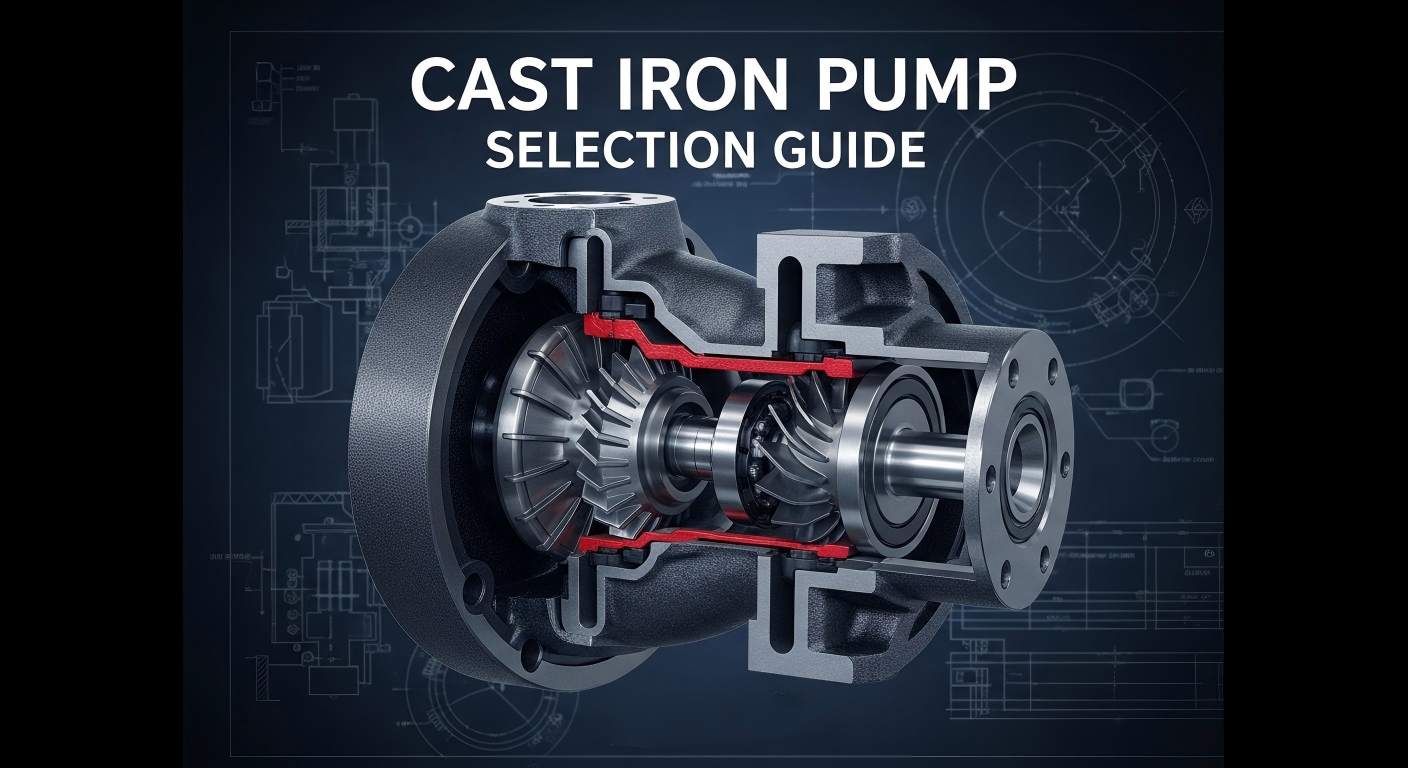
Core Characteristics of Cast Iron Pumps
The performance of cast iron pumps mainly depends on the selection of cast iron materials. Different cast iron materials are suitable for slightly different scenarios, and accurate selection based on medium and working conditions is the basis of cast iron pump selection.
Gray Cast Iron Pump
The most commonly used type of cast iron pump with the lowest material cost. It features good wear resistance, shock absorption and casting processability. It is suitable for conveying neutral media at normal temperature and pressure, such as clean water, light oil, crude oil without corrosive components, etc. It is widely used in conventional scenarios such as circulating water systems and light oil conveying pipelines in petrochemical parks, and is the most cost-effective type of cast iron pump.
Ductile Cast Iron Pump
Produced by spheroidizing treatment on the basis of gray cast iron, it has much higher mechanical strength and toughness than gray cast iron, with better wear resistance and impact resistance. It can adapt to medium and low pressure, slight wear working conditions, such as clean water containing a small amount of impurities and low-viscosity crude oil conveying. It is suitable for conventional scenarios with certain requirements for equipment service life and slightly complex working conditions, and is an upgraded alternative to gray cast iron pumps.
Malleable Cast Iron Pump
It has excellent toughness and easy machinability. It is suitable for small and light cast iron pumps, and for auxiliary conveying scenarios with small flow and low pressure, such as lubricating oil auxiliary conveying in petrochemical plants. Its application scope is relatively narrow, but it has the advantages of small size and convenient maintenance.
Core Advantages and Limitations of Cast Iron Pumps
Core Advantages
- Low cost: Compared with corrosion-resistant pumps such as stainless steel and titanium alloy pumps, the procurement cost of cast iron pumps can be reduced by 30%-50%, suitable for bulk procurement.
- Simple structure: Mostly centrifugal pump structure, easy to disassemble, assemble and maintain, daily maintenance can be completed without professional technicians.
- Good wear resistance: Suitable for conventional working conditions without strong corrosion and severe wear, service life can reach 5-8 years.
- Mature casting process: Specifications can be customized according to working conditions, suitable for small and medium flow, medium and low pressure conventional conveying requirements.
Core Limitations
- Poor corrosion resistance: Cannot convey corrosive media containing hydrogen sulfide, acid, alkali, salt, etc., otherwise it will cause corrosion and leakage of pump body and impeller.
- Limited high temperature resistance: Long-term operating temperature should not exceed 200℃. For high temperature working conditions (such as heat transfer oil conveying), high temperature resistant modified cast iron or other material pumps should be selected.
- Weak impact resistance: Not suitable for working conditions with large particle impurities and high pressure impact, easy to cause impeller damage and pump body cracking.
Four Core Application Fields of Cast Iron Pumps
According to different flow rate, head and medium characteristics, cast iron pumps play an irreplaceable role in the following fields:
| Application Field | Recommended Pump Type | Key Working Conditions and Selection Suggestions |
|---|---|---|
| Municipal Water Supply and Drainage | Horizontal Centrifugal Pump, Submersible Sewage Pump | The medium is mostly domestic sewage or rainwater containing certain impurities. Cast iron has outstanding advantages in wear resistance and low cost. |
| Agricultural Irrigation | Axial Flow Pump, Mixed Flow Pump | Large flow and low head are required for conveying river water (containing sediment). Cast iron material can resist sediment scouring, and the price is suitable for large-scale laying. |
| Petrochemical Industry | High Silicon Cast Iron Pump, Oil Pump | Conveying crude oil or non-oxidizing acid liquid. Pay attention to temperature limit; ordinary cast iron should not exceed 200℃ to prevent graphitization corrosion. |
| HVAC | In-line Pump | Hot water conveying in closed circulation system. Cast iron pumps run smoothly with low noise and have low requirements for water quality. |
Forbidden Scenarios for Cast Iron Pumps
- Strong Corrosion Working Conditions: Prohibited for conveying corrosive media containing hydrogen sulfide, hydrochloric acid, sulfuric acid, lye, etc., such as feeding of chemical reaction kettles and acidic wastewater conveying. Corrosion-resistant pumps such as stainless steel and titanium alloy pumps should be selected for such working conditions to avoid corrosion and leakage of cast iron pumps.
- High Temperature and High Pressure Working Conditions: Prohibited for high temperature (>200℃) and high pressure (>10MPa) working conditions, such as heat transfer oil conveying and hydrogenation unit feeding. Double-casing centrifugal pumps resistant to high temperature and high pressure should be selected for such working conditions, as cast iron pumps cannot withstand thermal expansion and pressure impact caused by high temperature and high pressure.
- Impurity-containing Working Conditions: Prohibited for conveying media containing large particle impurities (such as coal powder, slurry) to avoid impurities wearing impellers and pump bodies and causing equipment failures. Wear-resistant impurity pumps should be selected for such working conditions.
Summary
As the core conveying equipment for conventional working conditions in the petrochemical industry, cast iron pumps are the first choice for small and medium flow, medium and low pressure, neutral medium conveying scenarios with the advantages of low cost, simple structure, convenient maintenance and excellent wear resistance. The core of selection is "accurate matching of working conditions and medium". Clarifying the material characteristics, applicable scenarios and forbidden scenarios of cast iron pumps, avoiding selection misunderstandings, and completing proper installation and daily maintenance can give full play to the cost-performance advantage of cast iron pumps and reduce equipment investment and maintenance costs.
For more cast iron pump products and selection solutions, please visit the Omron Tech Pumps official website: www.Omron Tech Pumps.com